Search
 
 
Home swamiji Ebooks Articles Multimedia Uploads Catalogue Sitemap Contact


Ebook
 
THE teachings of the bhagavadgita

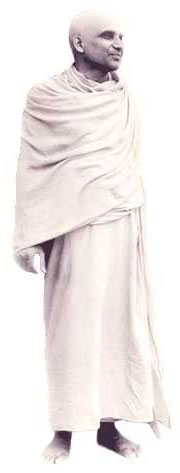
by Swami Krishnananda
The Divine Life Society - Sivananda Ashram, Rishikesh, India

1
1
Chapter 9: The Majesty of God-Consciousness (Continued)


There was a Brahmin who was a great devotee of the Bhagavadgita - this is a story which touched me deeply, and perhaps it has a great meaning. He was a great devotee of this verse: Ananyashchintayanto mam ye janah paryupasat; tesham nityabhiyuktanam yogakshemam vahamyaham. He was so confident of the help that he would receive from the Almighty that he was carefree in life, poverty stricken though he was. Practically, he was living a life of begging from the neighbourhood. Yet he was so confident that he would receive what he wants because of the promise that the Almighty gives in this great ordinance. One day he had nothing to eat; second day he went starving; third day there was nothing to eat, children were crying, the mother in the house was weeping. "Is God dead, is He alive? What is the meaning of your sloka? Throw out this Bhagavadgita," said the old mother. The poor man was flabbergasted, he wept, "Is this proclamation false? There is no truth in this statement?" Down goes the Bhagavadgita - he struck that verse with a nail. Those days, scriptures were written on a palm-leaf, not a printed paper like this. He struck with a nail the verse written on a palm-leaf, tore it up, threw it away and went out in disgust that no God exists. "We are dying and nothing comes - and yet, there is this promise." The old man went; very interesting story for you to hear. He went weeping in the streets. The story goes that one boy came running with a bag of rice on his back and with some rations and many other things on his head - a large hoard - and threw it on the verandah of the house, but his tongue was bleeding. The mother of the house came out and asked, "Who are you? What is it that you are bringing?" "These are the rations sent by your master; the father of the home has sent this - I will go." "Thank you very much, but why are you bleeding? What happened to your tongue?" "Oh," the boy said, "I was a little delayed in bring you these things, and your man was so angry with me that he tore my tongue." "Oh, I see. What a cruel fellow! I did not know this." He vanished - the boy vanished. After the old man came home, the lady was down upon him. "What happened, are you mad? You tore the tongue of that boy because he came a little late?" The old man said, "Which boy? I never sent any boy." Then the lady described the whole story. The old man burst into tears, cried, and then told the lady, "From today, you are my Guru, you had darshan of Lord Krishna; I had not that fortune." Who else could have brought this costly stuff, and this indication of the torn tongue shows that it was nothing but divine dispensation that so grandly operated. God is never unkind, He is never unjust, He is never cruel, He never does harm to anybody - such is God.

There is some sort of message that we seem to receive from the meaning that we can read between the lines in the ninth and the tenth chapters - everywhere He is present, sometimes more pronounced in His manifestations, sometimes not so manifest. Yadyadvibhutimatsattvam shrimadurjitameva va; tattadevavagaccha tvam mama tejomshasambhavam: Wherever there is exaltation of any kind, power, knowledge, capacity, whatever it is, a super-normal manifestation of anything in this world, it may be artistic capacity, literature, music, administration, whatever it can be - where there is a super-normal expression of this characteristic or endowment, know thou, I am present there." Not that He is not present anywhere else; this will be seen in the eleventh chapter that He is present even there where He is not pronouncedly present or markedly visible.

We are taken gradually to giddy heights where God's preponderance, superintendence and all-inclusiveness engulfs not merely human individuality and the isolated existence of jivas, but absorbs all of our rules and regulations, predilections, studies, power and knowledge into His bosom, so that He stands unparalleled. There is no second, either above or below or right or left or anywhere. This is the might of God, and there is no one to behold this might except He Himself. It is the Glory of God, beheld by God only, and He sees Himself, He loves Himself; He is what He Is. To this height Arjuna's mind has to be taken, and the minds of every one of us have to be led. Then we shall no more feel a necessity to exist as we are today. The love of this body, the greed after self-justification, this craving of the jivas will no more feel the necessity to receive recognition from anywhere, as a disease would not like to be recognised. This so-called independence of ours can be compared to an illness, like a carbuncle that has grown on the Universal All-Comprehensiveness. Who would justify it? Who would like to maintain it for a long time? This is a disease, but as one can love one's own disease, so one can love one's own ego, this body and everything that is connected with it.

Deluded man, totally oblivious to his glorious goal, foolish in his pursuits, regards himself as all-master in this world, which may carry on and continue for some time until God takes up his rod and tolerates it no more. And there cannot be a greater evil in this world than self-justification. Every other evil follows from this: audacity, tyranny, despotism - all these follow from self-justification. A little bit of long rope is given by God Himself to every one of us, so we may live in our own fool's paradise for the time being and we may rule in the hell that we have created here. That is okay; for some time, enjoy your hell. But when adharma, incomparable adharma which is this egotism of man, goes to heights, to the breaking-point, then God Himself cannot tolerate it anymore. He takes up His cudgels and there is a dissolution of the cosmos. And, when He takes up the reigns of rule in His Hands, the rule in the kingdom of individuals not only does not operate, but powerfully gets communed with this universal rule of the kingdom of the Absolute.

All this is told to Arjuna and he weeps, "Mighty Lord, I cannot understand what You are speaking. I am in a state of consternation, my mind is not working, I do not know where I am standing. You are describing a glory in a manner which my mind, my reason, is not expected to contain or understand. What is this 'might' , this 'glory' , this 'grandeur' , this 'completeness' , this 'absoluteness' - it is possible for me to behold this?" That is the question in the earlier verses of the eleventh chapter. "Who can behold It?" This eye which sees through the microscope or the telescope is not the instrument to see the Almighty. We have but only these eyes, these two eyes. They cannot see that All-being. An integral vision is necessary to behold this integrality of existence. The superficial, phenomenal eye sees diversity everywhere, but distinction between the seer and the seen is not the tool that you can employ in the vision of the Absolute. So the Great Lord says, "You cannot behold this Being, this Mighty Form of Mine, with these two eyes. I shall endow you with a third eye." This third eye is an integral intuition, the total consciousness, the whole of our being welling up into action - the Atman beholding Brahman. That miracle seems to have taken place by some magical action of the Almighty, and we cannot understand how it took place. We have only to accept it; it has been there, it is there, and there is nothing more to say about it.

What did Arjuna see? Well, when we say 'saw' or 'see', we should understand that it is not 'seeing' with these two eyes, because it is already mentioned that the two eyes of man, the mortal eyes, cannot behold the Immortal. He saw a miracle. These sentences we are using are inadequate to the purpose; we are using fragile words of mortal language for describing the characteristics of Immortal Existence. Like a frog in the well describing the ocean - this is how we are describing the Almighty. Whatever be our description, it falls short, badly, from that Mighty, Super-Nature. It is impossible to describe the meaning of the eleventh chapter. It just stands unparalleled in poetic excellence, and an exuberance of philosophic abundance. We have to read it for ourselves; our soul has to read it - not merely our eyes. Vyasa, the great author of the Bhagavadgita, goes into raptures, as it were, in giving a description of this rapturous experience of Arjuna, and poetry is the only way of expressing such miracles and wonders and marvels and majesties. Prose is poor - poetry is supreme here, and the poetry in Sanskrit here goes to its heights. When we are in a state of rapture, we speak anything that we like - any word that comes from us is holy at that time. It is the Divine Word that we speak because we are in ecstasy of Self-possession, God-Possession - it is a Veda that comes from our mouth when God possesses us and we speak at that moment. This great vision is difficult to have because God is 'All' and He cannot tolerate the presence of another 'all' external to Him. There cannot be two kingdoms of God. If we establish our own kingdom here, on earth, vying with the eternal kingdom of the Absolute, then we may rule our kingdom well in the way we are having here in it; but this empire of ours cannot reach that divine empire.

Na vedayajnadhayanairna danairna ca kiryabhirna taopbhirugriah; evamrupah sakya aham nrloke drastum tavadyena kurupravira: Not anything that man can do or an individual is capable of, can be considered as adequate for this purpose. What is necessary is the total abnegation of oneself. God does not require anything from us - no prasad or sacrament. Nothing can be offered to God because everything belongs to Him. There is nothing with us because we possess nothing here. What can we offer to Him? Perhaps the last thing that we have is our own individuality, our egoism, our personality, our being. God asks that we may be offered to Him, and not anything that we may have. He does not want a temple to be built for Him, a house of brick and mortar, calling it a chapel or a church. He does not want any offering because all these offerings are not our properties. We are offering to Him what does not belong to us - this is not a charity. But what we consider as our property is ourself only. The last thing that we can part with, the dearest and the nearest of our possessions, that object which we love most, it is our own self - let this love melt into God-love.

Bhaktya tvanayaya sakya ahamevamvidho - This bhakti, this devotion spoken of here, is not a little lip sympathy that we show to God. It is not a bowing of the head, it is not the folding of the hands or the striking of the cheeks - it is the melting of ourselves in the menstruum of God-Being. We can only speak, but our reason cannot grasp what all this means - Matkarmakrnmatparamo madbhaktah sangavarjitah; nirvairah sarvabhutesu yah sa mameti. Again to repeat, Ananyashchintayanto mam ye janah paryupasate; tesham nityabhiyuktanam yogakshemam vahamyaham. Recite this sloka every day - contemplate its meaning. Nobody can harm us. There is nobody who is not under the subjection of God's rule, and therefore when we are in communion with this Great Master of the World, who can do harm to us? The whole army of God will protect us, provided we are honestly in fraternal relation with Him and we regard Him as All-in-All. In a way, the response from God is proportionate to the response from us in respect of Him. The way in we envisage Him, or contemplate Him, or understand Him, that perhaps is the way in which He will respond. "As you do to Me, so I shall do to you - what you think of Me, that I will think of you - and what you give Me, that I also give you." If we give ourselves, God will give Himself. God does not give any material prosperity, though He can give that also. But when He Himself gives His Own Being, why should we expect any material prosperity? Do we not think that God is more than all matter, all the wealth of all creation? But God will offer Himself only when we offer ourselves to Him - not before. If we offer only a tidbit or tinsel, the response will be of the same type.

Thus it is that the Self-offering of God is an automatic, instantaneous occurrence as a response to the whole-souled offering of ourselves to Him. Here is bhakti reaching its culmination, its logical completion. The word 'bhakti' is not the proper word to describe this condition. It is not jnana, it is not bhakti, it is not yoga - it is every blessed thing. When we love a thing with all our soul, with all our heart, with all our being, we do not know how to describe it in our language. It is not devotion, it is not affection - it is something more than all this. Do not use any words from language; it is something more. Thus is the devotion, thus is the bhakti that is the surrender, that is the yoga and that is what is expected of us here when we reach the supreme culmination of yoga which is the vision of the Absolute in the Vishvarupa. Jnatum drastum ca tattevna pravestum ca: To know It, to visualise It and to enter into It. These are the duties of man, finally. God-realisation is the goal of life. Union with God, entry into God, merging into the Absolute is the final goal of all things everywhere, all beings, living, non-living, visible, invisible.

Thus, yoga is an art of attaining to God-consciousness. The various types of yoga, which are the ways we understand for the purpose of this grand culmination, are described in the twelfth chapter, briefly, later on.

  1
 
  Catalogue Search Site Map Contact
  Design by Savitr as a Love Offering