Search
 
 
Home swamiji Ebooks Articles Multimedia Uploads Catalogue Sitemap Contact


Ebook
 
the Heart and Soul of Spiritual Practice

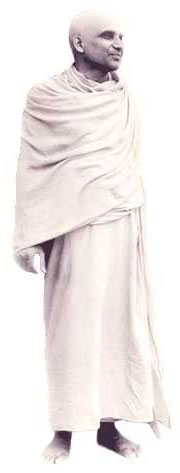
by Swami Krishnananda
The Divine Life Society - Sivananda Ashram, Rishikesh, India

1
1
Chapter 7: The Psychology of Meditation (Continued)
1

Now, having conceded this much, you must know what is experience. What is experience? It is a kind of awareness of something. That is your experience. Were you aware of something in the state of deep sleep? No. If there were no awareness of any kind, would experience be possible? No experience would be possible. Minus consciousness, minus awareness of something, of some kind, experience is not possible. If experience has not been there, memory also is not possible. A memory speaks to you in a language of the existence of a precedence of a true consciousness. How is it that by a logical analysis you seem to accept that you were perhaps only conscious of your being, though it was not true, actually, in the state of deep sleep? Like the sun shining in the sky, covered with dark, dense clouds, making it impossible for the vision of the sun - that type of experience perhaps you had in the state of deep sleep. The sun must be there - illumination, awareness of consciousness - without which the memory of an experience in sleep would not be possible. "How wonderfully I slept," you say. Who slept when you say, "I slept"? Who slept? This is also an object of further analysis. If you dispassionately analyse this situation without any kind of encumbrance of thoughts entering your mind consequent upon the waking condition, you will feel that you did exist as a pure, unadulterated awareness of being.

This unadulterated consciousness of being is indescribable because all description is a function of the mind, and the mind was not operating in that condition. Your true nature as true existence, coupled with an awareness of existence only, without any kind of attribute or externalised characteristic - that seems to be your real nature. The clash - the opposition set by this true nature of yours wanting its own Self-realisation with the mental operations of the waking state - keeps you restless, and you do not know where you actually are in this world. On the one hand, you have the conceptual world before you, the world of your eternal longings that get generated by the true being that you are as seen in deep sleep. On the other hand, the senses play havoc by saying that this sensory world of perception is everything. The phenomenal, which is this world of perception, and the noumenal, which is the true being that you are, oppose each other.

The eternal and the temporal clash in their purposes. And as you seem to belong to both the levels, you seem to be torn between two sides. You belong to a noumenal, eternal realm, which is the world of your aspiration, which is never ending - asking for more and more, endlessly - and on the other hand, you belong to the world of humdrum activity, sensations and mental operations. What is your status finally, then? You are a cross-section of two different realms of action. Two different worlds meet at one point, which is hidden within. There are other things which are very intriguing in human nature, but the most prominent intriguing factor is that you are pulled by the world of sense on the one hand, and you are pulled by the eternity that you are on the other hand. The world that you are not is considered as yourself by the insistence of the sense organs. But what you really are, the eternal being that you are, calls you by a different name and suggests your goal to be elsewhere - in the high heaven of the true Self, which is not in space and in time.

When you meditate, these factors do not always come by way of analysis. But if you practise deeply, they will come suddenly as a vista opened up before your mind and you will find yourself pervading an area far beyond the area of this world. You will feel lifted up from your own self in this act of meditation. What are you meditating on? When you consider yourself as someone belonging to this world of space-time limitation, the object of your aspiration looks like something beyond you - a transcendental existence away from you - which you have to reach by great effort. But if you are able to probe into the truths of your true nature, which is Being- Consciousness, you will find that there is no such conflict between your aspiration in meditations and the tussles which the mind presents before you. Two things take place in meditation - a pull from the world, and a pull from your true being.

The Yoga Shastras tell us that there are stages of the illumination of the entanglements of the mind in meditation. The entanglements have to be analysed first and foremost. The mind says that you are in one place and the thing that you are contemplating in your mind is in another place. Rarely can you identify the object of meditation within yourself. It is always somewhere.

There is a third factor, which is the movement of the mind towards the object of your meditation - a process of knowledge, as it is called. A triad act takes place psychologically. You are aware that you are meditating, you are aware that you are meditating on something, and you are also aware that meditation is going on. But there is something more, apart from this triad act - namely, thoughts which are irrelevant to the act of meditation. You would like to be free from certain thoughts which are not going to contribute to your meditation.

What are these thoughts? They are thoughts which engage your attention in the waking state, with which you are busy. They intrude because of the habit of the mind to think only in terms of this world of objects. You were born many, many years back; since that time, how many times have you thought of this world and things? Every thought produces an impression on the mind - an impression which, like a gramophone groove, repeats itself again and again for further operation along the same line - and the mind cannot easily accommodate itself to the thoroughly reverse process in meditation. A new educational career is embarked upon in meditation. You are not the same person as you were when you were born or as you lived in this world. A new orientation of thought takes place.

The ordinary way of thinking is to bifurcate what you are expecting to achieve finally and the thing that you are seeing with your eyes. This bifurcation has to cease by many methods that you have to employ, and a general recipe to tackle this problem cannot be given at one stroke for the benefit of everyone. Since emotions and impressions in the mind, caused by perceptions in the world, vary from person to person, a single medicine cannot be prescribed for all people; they vary in detail, though generally they are common to some extent. So, in the state of meditation, in the earlier stages, at least, it looks like a struggle to pull yourself from the temptation to think in terms of things to which you are accustomed and, on the other hand, to raise the thoughts higher up to the realm of the comprehensive form of the object of meditation, which is your be-all and end-all.

Another difficulty which arises in the process of meditation is the fear arising from an indescribable and unclear relationship that you have with your object of meditation. "How am I related to this object?" Whatever your object of meditation and your relation to it may be, you have taken for granted at the very outset that it is going to satisfy you fully. The ishta devata, as it is called, is your dear object. That which is dear is capable of satisfying you entirely. Otherwise, it cannot be really dear. Hence, the ishta devata is the deity which is dearest to you.

The charm of the object of meditation makes you feel a little cautious in the choice of the object. In a highly philosophical sense, you can concentrate on any part of the universe and it will lead you to the entire structure of the cosmos. But this is hard in the beginning stages. You have to choose that which you love most and think is the best thing that you can satisfy yourself with. It is the whole thing that is there before you. The object of your meditation is not one thing among the many things in the world, because one thing which is only an item among many other things in the world will feel very humble and simple and neglected in the midst of the vast ocean of other things like it. It will not be pre-eminent or capable of satisfying you entirely, because there are other things also which are equally competent. One finite object is as good as any other finite object.

So if your object of meditation is one finite object, there is certainly a point in the mind running to other things. "When there are many other things which are equally good, as good as the object on which I am contemplating, why should I engage myself unnecessarily on this one object only? Why should I not go to other objects?" This is the philosophy of the distraction of the mind. But the choice of the object is to be such that it has to be above the finitude which is characteristic of things. In a sense, the object that you are contemplating is infinite in its possibilities and potentiality; it can give you everything.

Is there one thing in the world - think of it - that can give you everything that you want? You will find there is nothing in the world which can give you everything that you want. Everything can give you little, little things, but you cannot get all things. You have to find, by deepening your thought process, a thing which can give you everything possible - that is to say, a point of concentration which draws into itself the forces of the whole of nature, like a magnet pulling towards itself every iron filing around it. The object of your meditation is capable of pulling towards itself the whole cosmos of energy. On this you contemplate as something which enters you through your thought process of meditation and energises you at the same time with such potency as can be compared with the potency of the entire creation.

Here you have to have the guidance of a teacher, because you cannot know what it is that you are thinking in your mind and what actually is the object that can satisfy you fully, entirely, eternally - for ever and ever. Normally, you cannot think of such a thing at all. This requires initiation by a competent master who knows the relationship between you and the entire creation around you. The problem is the relationship between you and the whole of creation around. However much you scratch your head, you may never know how you are connected with this world - this universe, this creation. Initiation by the Guru, by the mentor, by the teacher, by the guide, is a process of gradually, through an educational process, introducing you to the great concept of the cosmic relationship between you and the object of your meditation. Here is the sum and substance of the psychology of the meditational process.

Unless you know your mind, as I mentioned to you, you will not know anything because, somehow or other, the processes that you employ to attempt knowledge pass through the lens of the mind, which is partly a medium of thinking and partly a representative of the eternal object of your longing. Sometimes the lower mind and the higher mind are separated. The lower mind is that which pulls you toward the object of sense, and the higher mind, the reason, with a superabundance of intense longing for the higher, pulls you in the other direction. You are pulled horizontally by the lower mind in the direction of sense objects and you are raised up vertically by the reason, which is a reflection of Cosmic Intelligence.

Here is before you an outline of the psychology of meditation. With this knowledge you will choose your object correctly and you will never grieve, under any circumstance, because this thing on which you are meditating blesses you with everything.

  1
 
  Catalogue Search Site Map Contact
  Design by Savitr as a Love Offering