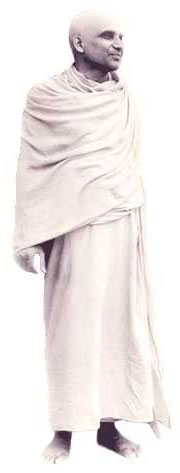
by Swami Krishnananda
svarge
loke na bhayaṁ kiṁ ca nᾱsti na tatra tvaṁ na
jarayᾱ bibheti,
ubhe tīrtvᾱ aśanᾱyᾱ pipᾱse
śokᾱtigo modate svarga-loke. (12)
Nachiketas asks: “Lord, I have heard that in heaven there is supreme satisfaction, there is no death. People are youthful, with no fear of old age. How do they gain immortality? Teach me that secret!”
Gods in heaven experience only birth, youth and growth; no old age and death. There are two heavens, the lower and the higher. The lower one referred to in the Puranas is indra-loka, and the higher one is brahma-loka. Nachiketas may be referring to both of them. In the lower heaven is intense joy. It is like our world; a counterpart to our desires, but there is no heat, cold, hunger, thirst, old age, disease and death, all of which are our sufferings here. The individuals there are partaking of the glory of the realm. But from that heaven, one has to come back. One may go there on account of having done good deeds here, but on exhaustion of their merits, he returns. The higher heaven or brahma-loka is different in its nature: it is identical with hiranyagarbha. And here, one crosses over hunger and thirst.
When one becomes the Soul of the cosmos, or hiranyagarbha, there is no return. It is enjoyment not only after death, but even while living. This state is known as jivanmukti, and described in various ways in our scriptures. It is the state of vaishvanara, identified with vaishvanara-agni or nachiketas-agni, or universal fire. This vaishvanara is ishvara, the Universal Man (vishva and nara: vaishvanara) to be attained through a mysterious upasana by imagining, in internal meditation, the external sacrifice. The Aranyakas contain such types of meditation where the actual sacrifice is contemplated in the mind, without material objects. The nachiketas-agni is an example of this type. This particular portion of the Upanishad is a faint memory of the Aranyaka portion of the Taittiriya Brahmana.
sa
tvam agniṁ svargyam adhyeṣi mṛtyo, prabrῡhi taṁ
śraddadᾱnᾱya mahyam,
svarga-lokᾱ amṛtatvam bhajanta, etad dvitīyena
vṛṇe vareṇa. (13)
“O Yama, you know the secret of the performance of this mysterious universal fire-sacrifice, by which one can attain heaven. Teach this to me, who has come with faith. I am honest. I have heard that they become immortal, who reach that abode. This I choose as my second boon.”
From the external sacrifice of Gautama, we turn to the internal one of Nachiketas.
pra
te bravīmi tad u me nibodha svargyam agniṁ naciketaḥ
prajᾱnan
anantalokᾱptim atho pratiṣṭhᾱṁ viddhi, tvam
etaṁ nihitaṁ guhᾱyᾱm. (14)
“Well, I shall tell you the secret,” says Yama. “I do know it, and I know that you know that I know. This heavenly fire, which is not physical, is the support of the Virat-purusha, the universe; and it is in your heart, secretly.”
What is this universal fire? Not found in the kitchen, not found in the house, but in the heart of everyone. Just as the ocean is in every drop, the Universal is in you, and can be invoked. The knowledge of this agni is equal to becoming the support of this universe, attaining to all worlds, nay, he himself is this creation. Wonderful is this teaching! It is not easy to explain what this universal fire is. The fifteenth mantra says it very enigmatically, and it is difficult to understand.
lokᾱdim
agniṃ tam uvᾱca tasmai, yᾱ iṣṭakᾱ,
yᾱvatīr vᾱ, yathᾱ vᾱ.
sa cᾱpi tat pratsvadat yathoktam; athᾱsya
mṛtyuḥ punar evᾱha tuṣṭaḥ. (15)
The Upanishad does not reveal what Yama told Nachiketas, but uses a mystical language: agni is the origin of everything, and creation emanates from it.
“This sacrifice can be done either internally or externally, even as you can adore God by thinking of Him, or by offering flowers to Him. The nature of the substance with which to build this altar, the number of bricks and the way of lighting the fire—these three are the difficult things in the sacrifice. Whatever Yama spoke, Nachiketas repeated it just as it had been told.”
tam
abravīt prīyamᾱṇo mahᾱtmᾱ varaṁ
tavehᾱdya dadᾱmi bhῡyaḥ.
tavaiva nᾱmnᾱ bhavitᾱyam agniḥ,
sṛṅkᾱṁ cemᾱm aneka-rῡpᾱṁ
gṛhᾱṇa. (16)
“Yama was very pleased with his competence and said: ‘My dear child, I give you here another boon: I ordain that from now on this sacrifice will be called by your name instead of vaishvanara-agni. Take also this multi-coloured garland’ (symbolising prakriti).”
In mystical texts, the spiritual experience in this condition is compared to a garland of different colours that adorns the seeker, indicating manifold experiences and not only a single one. Here, one is blessed with universal knowledge of the past, present and future, and of memory of previous births. Past and future become an eternal present.
There are many stages of God-attainment, and three or four major ones. One of them is the acquisition of omniscience, or universal knowledge, or being hiranyagarbha, the Soul of the universe. This meditation which gives the practitioner supernatural knowledge—because the world which is normally seen as an external object enters into himself—is described elsewhere in this Upanishad. A Guru has to teach personally how this is done.
triṇᾱciketas
tribhir etya sandhiṁ trikarma-kṛt tarati janma-mṛtyῡ,
brahmajajñaṁ devam īḍyam viditvᾱ nicᾱyye’mᾱṁ
śᾱntim atyantam eti. (17)
This is the crux of the teaching. The performance is threefold; the means employed are threefold; the action is threefold. It is only through the tradition of a Guru explaining this enigmatic mantra that we know its meaning. What is this threefold performance symbolised by the threefold fast? It is self-control in the three realms. In addition to physical fast, also fast mentally. And thirdly, you should not even have a subconscious desire, not even for renown or omniscience. This threefold internal meditation is trinaciketas: piercing through mind, intellect and soul. Another explanation says it means father, mother, Guru—threefold gathering of knowledge. Still another holds that by performing the three duties: tapas, dana and yajna—the three austerities relating to oneself, world and God—one transcends mind, intellect and individuality; tapas meaning the restraint of one’s passions; dana the giving out of oneself to the world, thereby killing the ego; and yajna the sacrifice of one’s individuality. “By these, one crosses over birth and death. Then the flame burns steadily in the form of divine experience, born of Brahma or the Universal. Knowing Him, resplendent and adorable, one reaches peace ultimate.”
triṇᾱciketas
trayam etad viditvᾱ ya evaṁ vidvᾱṁś cinute
nᾱciketam,
sa mṛtyu-pᾱśᾱn purataḥ praṇodya
śokᾱtigo modate svarga-loke. (18)
“Nachiketas, I have told you the secret of internal meditation, hereafter to be called nachiketas-agni. Performing it, he who lights thrice this fire breaks the bonds of birth and death (which are but raga and dvesha). Breaking them, one becomes a jivanmukta in this very birth. Freed from all sorrow, he reaches the highest heaven of divine bliss.”
eṣa
te’gnir naciketas svargyo yam avṛṇīthᾱḥ
dvitīyena vareṇa.
etam agnim tavaiva pravakṣyanti janᾱsas; tṛtīyaṁ
varaṁ naciketo vṛṇīṣva. (19).
As a result of two days’ fasting, Nachiketas received the blessing of two great boons. Now, Yama speaks to him about the third one: “Nachiketas, your second boon has also been granted; the fire sacrifice will be known by your name. Choose now your third boon.”
yeyam
prete vicikitsᾱ manuṣye ‘stītyeke nᾱyam
astīti caike;
etat vidyᾱm anuśiṣṭas tvayᾱham,
varᾱṇᾱm eṣa varas tṛtīyaḥ. (20)
The boy now surprises Yama by raising a most unusual and unexpected point, a question that most people would not even think about: “I ask of you not any material object, but a knowledge which I wish to receive. What happens to the soul when it reaches its final death—extinction of personality. Some hold that nothing exists; that all is void. Some say, something is. I shall regard your blessing me with this knowledge as my third boon.” This is not the death people normally undergo but the other one, when the soul crosses all phenomena. Does it exist there, or does it get extinguished?
This question was also put to the Buddha. He replied that to say something exists or nothing exists is both wrong. Maitreyi asked Yajnavalkya about this same theme, to which he answered that after final death, there is no self-consciousness.
devair
atrᾱpi vicikitsitam purᾱ, na hi suvijñeyam, aṇur eṣa
dharmaḥ,
anyaṁ varaṁ naciketo vṛṇīṣva, mᾱ
moparotsīr ati mᾱ sṛjainam. (21)
“Even the gods wonder about this, and have never come to an understanding. Subtle is this truth, so subtle that no answer would be adequate to it. So, Nachiketas, please ask another question. Please release me from this obligation,” said Lord Yama.
But Nachiketas was not a person to give up like that.
devair
atrᾱpi vicikitsitaṁ kila, tvaṁ ca mṛtyo yan na
suvijñeyam ᾱttha,
vaktᾱ cᾱsya tvᾱdṛg-anyo na labhyaḥ; nᾱnyo
varastulya etasya kaścit. (22)
“You say that even the gods have doubt; that it is the subtlest of truths—from this I can derive that you know it. I am happy to be in the presence of the proper person! No boon can be equal to this: I do not want an inferior one!” With this statement, Yama is cornered.
śatᾱyuṣaḥ
putra-pautrᾱn vṛṇīṣva bahῡn paśῡn
hasti-hiraṇyam aśvᾱn
bhῡmer mahad-ᾱyatanaṁ vṛṇīṣva
svayaṁ ca jīva śarado yᾱvad icchasi. (23)
“I offer you big posterity, wealth, cattle, gold and elephants in plenty; land and long life for yourself.”
etat
tulyam yadi manyase, varaṁ vṛṇīṣva, vittaṁ
cira-jīvikᾱṁ ca,
mahᾱ-bhῡmau naciketas tvam edhi, kᾱmᾱnᾱṁ
tvᾱ kᾱmabhᾱjaṁ karomi. (24)
“Any boon like this that you want, choose it, and wealth and long life. Prosper, O Nachiketas, on this vast earth!”
ye
ye kᾱmᾱ durlabhᾱ martya-loke sarvᾱn
kᾱmᾱṁś chandataḥ prᾱrthayasva.
imᾱ rᾱmᾱḥ, sarathᾱḥ
satῡryᾱḥ, na hīdṛśᾱ
lambhanīyᾱ manuṣyaiḥ,
ᾱbhir mat-prattᾱbhiḥ paricᾱrayasva, naciketo
maraṇam mᾱnuprᾱkṣīḥ. (25)
“Whatever delights there may be, conceivable or inconceivable, visible or invisible, ask for them without restraint. Here are chariots, and noble maidens with musical instruments, to serve you. People have never even seen them; they cannot be won by men. Be happy with these. But do not ask about this great death again, I pray!”
śvo-bhᾱvᾱ
martyasya yad antakaitat sarvendriyᾱṇᾱm jarayanti tejaḥ
api sarvaṁ jīvitam alpam eva tavaiva vᾱhᾱs tava
nṛtya-gīte. (26)
Nachiketas says: “I understand your intention. But ephemeral are all these pleasures! They wear out our senses; we become feeble and old after their enjoyment. Even longest life is nothing before eternity; and all the happiness—because it has a beginning—shall have an end also. These chariots, these damsels and enjoyments: take them back; I do not want them!”
na
vittena tarpaṇīyo manuśyaḥ, lapsyᾱmahe vittam
adrᾱkṣma cet tvᾱ,
jīviṣyᾱmo yᾱvad īśiṣyasi tvaṁ
varastu me varaṇīyaḥ sa eva. (27)
“No man can find eternal contentment with these, and yet you want me to be satisfied with them.” This is what Yayati declared after a hundred years of enjoyment: “Wants have no limit; when one is satisfied, another one comes up, and then a third one, and so on.” Thus, no wealth of the world can keep anybody content. “And if I wanted this wealth: if I know the secret about death from you, it shall come as a corollary. So why should I only want the effect without the cause, the former being transient and fleeting, since we shall only exist as long as the world, for when it gets dissolved, we too, shall have to go. I do not want all these things.”
These are temptations in the path of sadhana, to which Nachiketas gave a prompt and befitting reply. All objects Yama offered come under the eshanas. There are three of them: vitteshana, putreshana and lokeshana, also called kanchana, kamini, and kirti; the desire for gold, the desire for sex and the desire for fame; these three bind the soul and prevent its further progress. Yama offered everything except God, with the intention to trick Nachiketas; but his ruse is met with equal strength of viveka and vairagya: the power of renunciation backed up by understanding.
Whatever be its glamour, everything is transient. Even glamour is relative to this world, and when the latter changes, the former also changes, and we are in horror instead of delight. Even if we are to really get these things, they are not going to satisfy us. No one can truly be happy with them, because wants rise ultimately from a lack felt within, from an infinite Source which cannot be satisfied by finite objects of this world. Like stones, that cannot fill the vast depth of the ocean, the gifts being offered by Lord Yama cannot fulfil the desires of a person. “O Lord, give not these things to me. They are of no use. May I repeat: I want only that which I asked for.”
ajīryatᾱm
amṛtᾱnᾱm upetya jīryan martyaḥ kvadhasthaḥ
prajᾱnan
abhidhyᾱyan varṇaratipramodᾱn, atidīrghe jīvite ko
rameta. (28)
“A mortal having come face to face with the Immortal that you are, how could he ask for mortal things? By properly scrutinising the nature of the various attractive pleasure-centres of the world, who can ask for a long life? It is full of pain, and a long life is only extending the misery. No one who knows of That which perishes not, would want what you are offering.”
When an object is presented before us, what is presented is nothing but a shape, colour and contour. The perception of an object is coupled with the longing for it, a meaning it represents; and this meaning tells us whether we should have it or not. It excites the desire to contact the object, which results in delight. Happiness is of three kinds: priya, moda and pramoda. Happiness by perception of a desired object is priya. You get stimulated when you see a desired object. When you possess it, the happiness increases; this is moda. The happiness of enjoyment is still more intense; it is called pramoda.
When one enjoys an object, one forgets himself, and it is this self-forgetfulness that brings delight. The nearer an object comes, the more pleasure it gives, and the more you forget yourself. This happens when one experiences sense-pleasures in deep sleep and in samadhi; in all three states, self-consciousness is lost. But one does not know what happens in sleep and in sensory experience. When you are conscious of the object, you are not happy, and when you lose self-consciousness in the possession and enjoyment of it, you forget it and you are happy.
yasminn
idam vicikitsanti mṛtyo yat sᾱmparᾱye mahati brῡhi nas
tat,
yo’yaṁ varo gῡḍhamanupraviṣṭo
nᾱnyaṁ tasmᾱn naciketᾱ vṛṇīte. (29)
Clinching the whole matter, Nachiketas says: “I shall not be satisfied with all the things you offer. I shall be happy only with that thing about which even the gods have doubt. What happens to the soul in the last stage? Nachiketas shall not ask another question. Nachiketas wants nothing else than this.”
The student has proved his worth. The glamour has not tempted him, and he has stood the test successfully. This is the transitional process which is necessary between the first two boons and the experience of immortality. The temptation of the Buddha is relevant here: everything was offered to him. The difficulty is that one cannot know them as temptations, because they come as realities and it requires a superior intelligence to detect them and find out from where they have come, and why they have come. The condensed essence of all delights of all the worlds will come before us as a bar against our progress. But when viveka helps us, Truth shall reveal itself.
The world, through its laws, wants to prevent us from straying away; like sheep in a herd should we keep doing. Thus, the laws of the world to which we are tied take these forms, and the more we try to go away from them, the more they try to pull us towards them, and our attempts will be useless if they are inadequate. These are inconceivable ordeals. We cannot even imagine them now, and when we are really placed in such a condition, we will weep, not knowing where we are standing. Nachiketas is the representative of human character passing through a crisis.
Yama is now pleased beyond measure and speaks no longer words of temptation, but words of knowledge which soothe Nachiketas’ burning aspirations.