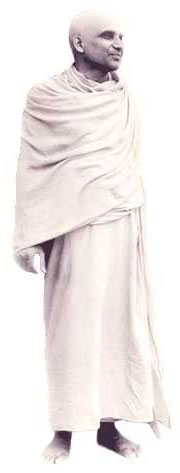
by Swami Krishnananda
Māyī sṛjati viśvaṁ san niruddhas tatra māyayā, anya ityaparā brute śruti stene śvaraḥ sṛjet (197). Ishvara is the cause. The eternal Absolute is not the cause because the Srutis, namely the Svetasvatara Upanishad, is referred to here: asmān māyī sṛjate viśvam etat tasmiṁs cānyo māyayā saṁniruddhaḥ (Svet 4.9). This statement is quoted here in brief by this verse. The Svetasvatara Upanishad says that the one who wields maya as His instrument or power creates this cosmos, and the other one who is controlled by maya is the jiva or the individual. This is, therefore, in confirmation of our definition of the creative principle as Ishvara – and not as Brahman, the Absolute.
Ānanda maya īśo’yaṁ bahu syāmi tyavai kṣata, hiraṇyagarbha rūpo’bhūt suptiḥ svapno yathā bhavet (198). Ishvara willed, “Let Me become many.” This is how the Brihadaranyaka Upanishad, in its first chapter, describes the process of the creation of the universe. “May I become many” – this is the will of Ishvara. The moment He willed in this manner, He became Hiranyagarbha, or the cosmic subtle body, in the same way as sleep may manifest itself slowly into dream consciousness.
Krameṇa yuga padvaiṣā sṛṣṭir jñeyā yathā śruti, dvividha śruti sadbhāvāt dvividha svapna darśanāt (199). Did God create the world abruptly: “Let there be light and there was light” – like that? Or was it a gradual evolution? There are two theories or doctrines of creation. Most of these statements that we have heard from the scriptures are in terms of gradual manifestation. He willed, He became Ishvara, He became Hiranyagarbha, He became Virat, He created space, from space came air, from air came fire, from fire came water, from water came earth, from earth came all living beings. Now, is this not a gradual process of evolution of the universe? Or is it just one thought: “Let all things manifest themselves” and they are there in one minute?
The Upanishads are not very clear as to how creation took place. Most of the scriptures rely upon this gradual manifestation of things. Only very rarely we hear it said that God suddenly manifested Himself as all the variety. Now the author of the Panchadasi says there is no objection to both these doctrines.
We have dream, for instance. Sometimes we dream things gradually, stage by stage. Sometimes suddenly we find a mountain, rivers, elephants, people – everything in dream. In one stroke we will find the entire world of people and all things in dream. That is also one way of creation by the mind. But sometimes it is not so. We gradually begin to visualise indistinct things first, and distinct things afterwards, and details much afterwards.
In the same way as dream can be gradually a manifestation of things in a systematic manner or it may be a sudden eruption, God's creation can also be a sudden will. Let there be this, and it is there. God can create like that; He has such a power. He does not have to depend upon gradual evolution, etc. He is not a scientist waiting for the gradual manifestation of effect from cause. He is much more than that. Yet His sudden will may take into consideration the necessity of the evolution of the effect from the cause, as in the case of dreams of people which can be suddenly manifesting themselves or gradually taking place from indistinct things to distinct things. This is some way of digression. It does not matter to us in what way God has created the world. The point is, there is a creation, and whether it is sudden or gradual is immaterial for practical purposes.
Sūtrātmā sūkṣma dehākhyaḥ sarva jīva ghanāt makaḥ, sarvāhaṁ māna dhāritvāt kriyā jñānādi śaktimān (200). From this supreme Ishvara who created by will, we say, by sudden will, this very same Ishvara is called Hiranyagarbha, Sutratma as we have already mentioned it in earlier verses, in whom all the jivas are studded together as beads or pearls in a garland, or cells, as it were, in an organism. Sutratma is the cosmic prana, same as Hiranyagarbha who is the cosmic subtle body in which we have brief outlines of the whole physical universe to be manifested; and He feels “I am”: sarvāhaṁ māna dhāritvāt kriyā jñānādi śaktimān.
When Hiranyagarbha feels “I am”, everything feels “I am” at once. All the atoms, all the sand particles, all the leaves, all the trees, all living beings, Gods and demons and human beings, everything suddenly begin to feel “I am”. This I am-ness in me and in you and in everybody, even an ant, is in fact the I am-ness of Ishvara – Hiranyagarbha's I am-ness. He feels “I am”, and immediately everybody starts feeling “I am”. When He breathes, we breathe. When He manifests, we manifest ourselves. When He withdraws, we are withdrawn. He has the power to create the universe, modify it as it is necessary, and has a clear concept as to what kind of universe is to be manifested for a given purpose.
Pratyūṣe vā pradoṣe vā magno mande tamasyayam, loko bhāti yathā tadvad aspaṣṭaṁ jaga dīkṣyate (201). In this condition of Hiranyagarbha, the world is indistinctly seen. In dust or early in the morning when there is very little light, we do not see things properly; we see objects indistinctly. In a similar manner, the forms of the cosmos are indistinctly visible as outlines, as it were, in the body of Hiranyagarbha. Aspaṣṭaṁ jaga dīkṣyate: Indistinctly, not clearly, is the world seen in Hiranyagarbha.
Sarvato lāñchito maṣyā yathā syāt ghaṭṭitaḥ paṭaḥ, sūkṣmā kārai stathe śasya vapuḥ sarvatra lāñchitam (202). Hiranyagarbha becomes Virat, the visible multi-formed cosmos. As the stiffened cloth becomes canvas, on the canvas outlines are drawn and the outlines become a visible colored painting, in like manner, this subtle Hiranyagarbha manifests Himself as a solid, visible, concrete, universe. Animated by the same consciousness, this animating consciousness of the physical universe is called Virat.
Sasyaṁ vā śākajātaṁ vā sarvato’ṅkuritaṁ yathā, komalaṁ tadvade vaiṣa pelavo jagadaṅ kuraḥ (203). Hiranyagarbha is very subtle, like a tendril or a tiny plant that is very tender, very soft to touch; such is the form of the universe. Like a soft tendril, Hiranyagarbha's condition is. When sunlight falls on things everything becomes clear, and such clarity is in the Virat-consciousness, as if strong sunlight is shed on objects.
Ātapā bhāta loko vā paṭo vā varṇa pūritaḥ, sasyaṁ vā phalitaṁ yadvat tathā spaṣṭa vapur virāṭ (204). When plants become trees and start yielding fruits, they become completely mature. The universe, completely mature in itself, in all its forms, in all its fructifications, is Virat-consciousness. As bright sunlight is, as colored painting is, as a plant becomes a tree and is there with all its fruits, so is this majestic manifestation of Virat in the form of this universe that we behold with our own eyes. Actually, when we open our eyes and see, we are seeing Virat only. Wrongly we think it is a world outside.
Viśvarūpā dhyāya eṣa uktaḥ sūkte’pi pauruṣe, dhātrādi stamba paryantān etasyā vayavān viduḥ (205). In the Visvarupadhyaya of the Veda, in the Purusha Sukta of the Veda, the glory of the Virat has been described as constituting everything right from the creative Brahma up to the blade of grass. All things are studded in that Virat-svarupa. This is described for us in the eleventh chapter of the Bhagavad Gita in a more poetic grandiose manner. Brahma, Rudra, all the Gods, all the denizens, even hell and heaven, and even little grass – everything we will find there in the body of Virat: dhātrādi stamba paryantān etasyā vayavān viduḥ.
Now Ishvara, Hiranyagarbha and Virat have been described. All things, whatever is in this world, is indistinguishable, finally, from the body of Ishvara, Hiranyagarbha or Virat. All is God: sarvam khalvidam brahma. This is the truth that we arrive at by this analysis.
Īśa sutra virāḍ vedhaḥ viṣṇu rudendra vahnayaḥ, vighna bhairava mairāla mārikā yakṣa rākṣasāḥ (206). Vipra kṣatriya viṭ śūdrā gavāśva mṛga pakṣiṇaḥ, aśvattha vaṭ cūtādyā yava vrīhi tṛṇādayaḥ (207). Jala pāṣaṇa mṛt kāṣṭha vāsyā kuddā lakā dayaḥ, īśvaraḥ sarva evaite pūjitāḥ phala dāyinaḥ (208).We may worship God as Ishvara or Hiranyagarbha or Virat, or Brahma the Creator, or Vishnu or Siva, Rudra, or as fire, agni, or as Vighneshvara or Bhairava, or some demigods like Mairala, Marika, etc., or other demigods like Yakshas and Rakshasas, as Brahmana, Kshatriya, Vaishya, Sudras, as cows, as horses, as deer, as birds, as trees like the asvattha, pipal, banyan or mango tree, or grains, the harvest of grains like paddy or rice, or grass or stone or water or wood, or chisel or axe or shovel – anything is God, and provided we have the faith that this is God, they will start speaking to us. A little stone will start speaking to us. Why should it not, because it is one little piece of the existence of this Supreme Ishvara-consciousness only.
Hiranyagarbha, Ishvara, Virat are present in all these things. The Puranas tell us that from a brick wall, Narasimha came out. Such a mighty being, coming out roaring, from brick! Can we imagine? God exists in the stone, so why not in other things? Īśvaraḥ sarva evaite: All these things that we have listed here, right from the top to the bottom, excluding nothing whatsoever, they are God only, Ishvara only. And if we really worship them with feeling and our devotion is sincere, they may respond to our devotion, and our expected fruit will follow.
Yathā yatho pāsate taṁ phala mīyu stathā tathā, phalot karṣāpa karṣau tu pūjya pūjānu sārataḥ (209). As our feeling is, so is the response from God. In what manner we adore God, in that manner only He will respond to us. It depends upon our mind, finally. The quickness of the response from God or the slowness thereof, the nature of the fruit that will be granted to us by God and various other factors in respect of the grace that may come from God, all depend upon our attitude towards God – what we feel about a thing – and that will be paid back to us in a similar manner. Thus, there is no place in this world, no location, no point in space, where God cannot be worshipped, and where our prayers will not be answered.