Swamiji on Facebook Swamiji on Twitter Swamiji on Youtube

The Realisation of the Absolute

A Treatise on the Vedanta Philosophy and Its Methodology
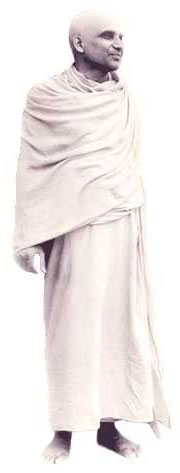
by Swami Krishnananda

Explanatory Notes (Continued)

The Technique of Sadhana

The sadhana-chatushtaya and the other virtues should be practised for the reasons explained, that they act as a powerful help in withdrawing oneself from taking interest in the perishable body and the world, and directing the consciousness to the Great Destination. If it is well understood at the very outset, how, actually, these disciplines are going to lead one to the way of Liberation, the process of practice will be intelligently and undeludedly undergone, the practice itself would be easy, and also get accentuated by a sense of freedom. Without proper knowledge of the exact anatomy, history and constitution of sadhana, one’s attempts are likely to be blind, and may not yield much good. Also, many a time, such thoughtless routines lead the aspirant to great calamity, instead of elevating him. A sadhaka is not expected to be idiotic or foolish, though he is required to have implicit devotion to his practices, to his teacher and to his deity. A sadhaka should have a clear presence of mind, common sense and rightly discriminating intellect, so that be may not be led astray by his emotions and the other sides of his weaker nature.

In order to become a well-fitted aspirant, one must purify oneself, by transforming the brutal and human instincts into spiritual energy. The natural expression of these undivine instincts is to be withheld and properly directed through various intelligent means. The most important of these self-transfiguring methods are:

(i) opposition;
(ii) substitution;
(iii) transformation and sublimation,

Opposition is acting in a manner directly contrary to a particular instinct, through thought, word and deed. Substitution is curbing the instinct through a replacement of it by another, more virtuous one. Transformation and sublimation is the melting and evaporating of the instinct into spiritual devotion, yogic energy and divine knowledge.

The subhuman qualities and the evil phases of human nature are rooted in the desire for the greedy satisfaction of one’s egoistic self, even if it may drown other individuals in sorrow. The grief forced upon other sentient beings, being the effect of a breach of the law of universal harmony, must necessarily rebel against and redound upon its cause, so that the disturbed balance may be restored again. It is not absolutely necessary to hold the theory that some extra-cosmic transcendental Father or Creator will afterwards inflict punishment on the sinner. It is obvious that, even without such a religious belief, it is quite intelligible that, sin being a violation of the truth of the inseparable unity of existence through an obstinate selfishness, clinging to the body and yielding to the dictates of the ego, the reinstallation of this truth, which ever refuses to be suppressed, should logically be by a defeat of the inimical force, which means the flow of the current of events against the individualistic propensity. But the propensity, too, demands fulfilment and craves for victory, and its victory over Truth being impossible, the ceaseless battle between the untruth of individual nature and the truth of absoluteness ends in the painful succession of the deaths and births of the individual trying to maintain its egoism. Every thought that is directed against the undividedness of existence is a venomous spear darted against the sender of that thought. It is a fetter to bind oneself with, a prison to throw oneself in. Evil is the perpetration of an action, physical, verbal or psychological, which presupposes a mental consciousness that directly or indirectly denies the indivisible character of the Absolute. This is sin, and this is real crime. This is the error that breeds the miseries of mortal life.

It is, therefore, not easy to detect the evil inside, as, very often, the perpetrator gets identified with the evil nature, as consciousness gets unified with the ambitious, non-discriminating ego. In the majority of cases, discrimination fails, and even if it shows its head, it is, generally, after the commission of wrong. The purpose of sadhana is to prevent the mind from taking recourse to its dangerous aberrations and from getting for the individual the bitter fruit of metempsychosis. Only after a very searching investigation would it be possible for one to have a correct knowledge of the workings of the inner powers, and to direct the consciousness to the apperception of its essential reality. The method of opposing the instincts of life with contradicting powers, or even the way of substitution, will not ultimately be able to achieve the required success. The sadhana-chatushtaya is a means of transforming and sublimating relativity in Absoluteness. Viveka, the foundation of all sadhana, is an extremely powerful overhauling, enlivening and illuminating spiritual agent. It helps one to understand, to know. Without intelligence, no act has value, no sadhana is worth its name. The moment there arises the light of pure intelligence, there is also at once the transformation of the individual from the lower nature to the higher essence. All the items of the sadhana-chatushtaya aim at the complete destruction of characters that are contrary to, or different from, the truly enduring Truth-Consciousness, and not merely at suspension of their activities through opposition in war or replacement of them by some other powers. As long as the lower obstacle shows even a slight trace of life, the higher region cannot be said to be really occupied fully.

The love for the individual, limited, selfish life is many times wrongly justified by the ravaging desires for name, fame, power, wealth and sex; by the tyrannising demands of the body; by lust for honour, worship, exaltation, praise and lordship; by ambitions connected with the objective world, whatever be the nicety and the refined garb or the polished appearance of these ambitions. Even craving for too much erudition or scholarship is an impediment to the spiritual seeker. These hosts of obstacles have to be stepped over; all desires, ambitions and curiosities have to be nipped in their bud. The more careful and circumspect a sadhaka is, the more should he try to sharpen and deepen his intelligence. There is no limit to the need for one’s vigilance and active consciousness. Even at the entrance to heaven, a passage may be there leading to hell. The boat may sink even near the opposite shore. The life of the sadhaka should be one of unfailing viveka and vichara crowned with the penetrating light of purified consciousness, so that he may search out and reach the knowledge and experience of the innermost recess of his heart, the bottom of the truth of his own being. All thoughts, words and actions which do not contribute to the realisation of this Being should be dispensed with, by the practice of the sadhana-chatushtaya, and then, the aspirant becomes fit to sit at the feet of the shrotriya and the brahmanishtha, to hear the nature of the Great Truth.